Compare and Contrast the 3 Main Hermetic Seal Types
Semiconductor manufacturing equipment operates under strict requirements, with each application presenting its own challenges. Choosing the right sealing solution for pass throughs is not a simple decision. Engineers must account for factors such as temperature and pressure requirements, long-term reliability, cleanliness, and customization capabilities. When vacuum compatibility is the primary concern, epoxy seals are a strong option, while ceramic seals are well suited for high-temperature environments. Selecting the right seal type ensures your equipment operates reliably and smoothly, with little impact on the overall design.
In the semiconductor industry, the main types of hermetic vacuum sealing are glass-to-metal, ceramic, and epoxy. They have different capabilities with respect to operating robustness, design versatility, and overall performance. Find out what type of sealing fits your semiconductor equipment needs.
Key Takeaways:
- No single sealing solution fits every semiconductor application.
- Proper hermetic seal type selection is essential for ensuring long-term reliability, performance, and cost efficiency.
- While epoxy seals are more flexible solutions, ceramic seals are more focused on high temperatures.
| Criteria | Glass-to-Metal | Ceramic | Epoxy |
| Vacuum / UHV Compatibility | ✓ | ✓ | ✓ |
| Cryogenic Performance | Poor | Fair | Excellent |
| Plasma Compatibility | ✓ | ✓ | ✗ |
| Diverse Material Compatibility | Low | Low | High |
| Conductor Density Capability | Low | Medium | High |
| Reliability | ✓ | ✓ | ✓ |
Hermetic Sealing Technologies: Glass-to-Metal, Ceramic, & Epoxy
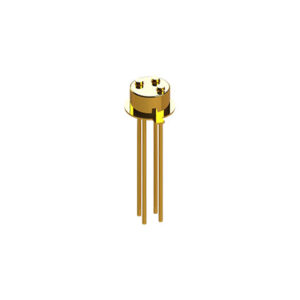
Glass-to-metal seals (GTMS) have long been a proven solution for achieving hermeticity in electronic packages. They are valued for their mechanical strength and ability to withstand elevated temperatures, but they can introduce design limitations due to strict material compatibility requirements and tighter manufacturing constraints.
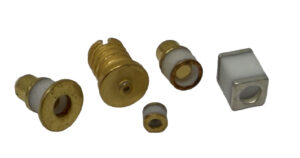
High temperature co-fired ceramic (HTCC) seals, alongside GTMS, have been a common solution for achieving hermeticity in electronic packages. HTCC seals provide higher temperature capabilities, but they cannot reach the same pressure range as GTMS.
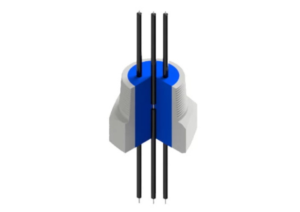
Epoxy sealing technologies offer an alternative approach that addresses many of these limitations. By enabling greater material compatibility and more adaptable geometries, epoxy seals provide engineers with increased design freedom and customization options. When applications require unique configurations, lightweight packaging, or integration with modern electronic assemblies, epoxy sealing can offer a more versatile solution.
Comparing Semiconductor Equipment Operating Environments
Vacuum and Ultra High Vacuum (UHV) Environments: There are multiple semiconductor manufacturing processes that take place within a chamber designed to maintain either vacuum or ultra-high vacuum environments. Hermetic seals ensure the chamber environment holds the proper conditions during operation. While epoxy seals may not match the maximum pressure tolerance of GTM or HTCC options, they can reliably meet the necessary pressure demands of most semiconductor equipment applications. At Douglas Electrical Components, testing has demonstrated vacuum compliance with our standard solution proprietary epoxy processing technology, and UHV standards met with an additional standard vacuum bake.
Cryogenics: Overall, epoxy-based hermetic seals offer a highly effective solution for cryogenic environments. GTMS can suffer from mismatched coefficients of thermal expansion, which may introduce stress and lead to seal failure during temperature fluctuations. While HTCC seals generally perform better than GTMS, under these conditions, they can still be susceptible to similar thermal mismatch challenges.
In contrast, epoxy sealing technologies can provide a more resilient solution. Because the epoxy bonds directly to the metal fitting, its natural contraction at cryogenic temperatures can enhance the integrity of the seal, resulting in a tighter, more reliable interface for the semiconductor application.
Plasma: Unfortunately, epoxy-based semiconductor technologies cannot withstand the elevated temperatures required for plasma environments. In this case, GTMS and HTCC solutions are well suited for these conditions, as they can reliably operate at the higher temperatures associated with plasma applications. Ceramic seals can even withstand higher temperatures than glass-to-metal. For these types of solutions, our subsidiary EPI specializes in glass-to-metal and ceramic sealing technologies.
Diverse Material Compatibility: Epoxy-based seals offer the broadest material compatibility, making them the most versatile option and an ideal choice for applications that demand a high degree of customization. In comparison, HTCC seals are limited to materials such as aluminum, aluminum nitride, and tungsten, while GTMS are compatible with glass, stainless steel, nickel alloys, and titanium. Epoxy-based seals, however, can be used with glass, stainless steel, nickel alloys, titanium, brass, aluminum, printed circuit boards, power studs, and bus bars. This expanded compatibility enables greater design flexibility, making epoxy-based solutions well-suited for complex and highly specialized applications.
Conductor Density Capability: Glass-to-metal, HTCC, and epoxy-sealed feedthroughs differ greatly in conductor density. Glass-to-metal seals typically have the lowest density because the rigid glass requires greater spacing between pins to prevent cracking. HTCC seals allow for tighter pin spacing due to their strong dielectric properties and thermal stability, offering moderate to high conductor density. Epoxy-based seals provide the highest conductor density because the epoxy seals directly around conductors with minimal spacing, allowing hundreds or even thousands of connections in a compact design. This provides epoxy sealed solutions far greater opportunities to customize high density designs without the substantial tooling fees required with GTM or HTCC sealed solutions. Designers are significantly hampered by the need to select from existing catalogs with GTM and HTCC seals. Epoxy is ideal for applications like semiconductor manufacturing where high pin counts, space efficiency, and design flexibility are critical.
Reliability: Due to their longer history and ability to withstand more extreme conditions, GTMS solutions are often perceived as more reliable and efficient than epoxy-based solutions, but not much different than HTCC solutions. However, at Douglas Electrical Components, our epoxy-based seals are manufactured and validated to the highest standards. Every unit is 100% hermetically tested, 100% electrically tested, and fully certified for quality.
In addition, our designs meet strict low outgassing requirements, preventing particle contamination in sensitive environments. We can confidently support operating temperatures as low as -270°C and as high as 175°C while maintaining optimal performance. For specialized applications, we are also willing to evaluate and develop solutions to meet higher temperature requirements based on your specific project needs.
Conclusion
Selecting the right hermetic sealing technology ultimately comes down to the specific demands of your semiconductor application. GTM, HTCC, and epoxy seals each offer distinct advantages depending on factors such as temperature, pressure, and environmental conditions. While traditional solutions provide performance in extreme environments, epoxy-based technologies continue to offer increased design flexibility, reliable performance, and, depending on your supplier, additional engineering support for many modern applications. By carefully evaluating your requirements, you can choose a sealing solution that ensures long-term reliability and optimal performance for your semiconductor application.
With semiconductor solutions dating back to the 1980s, Douglas understands how to evaluate complex systems and identify the right-fit solution for each unique environment. From initial design through the entire product lifecycle, we provide ongoing support long after purchase.
If you believe epoxy-based semiconductor solutions are the right option for you, reach out today and let our engineers help you build a more reliable system!