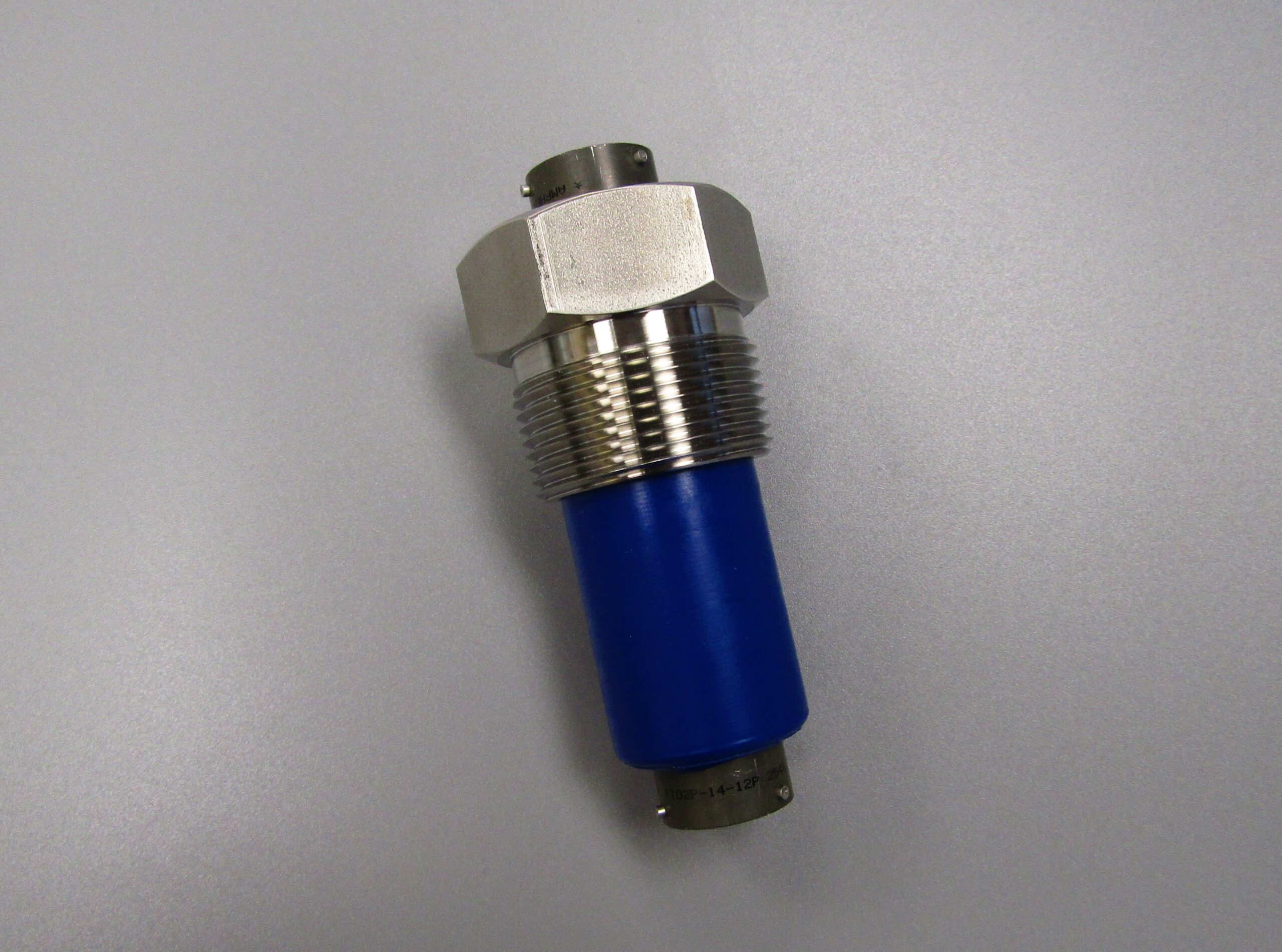
As semiconductor technology advances, manufacturers face growing pressure to deliver higher performance, greater efficiency, and tighter process control. Cryogenic technology is emerging as a powerful tool to meet these demands. By using ultra‑low temperatures during semiconductor manufacturing, cryogenics help improve reliability, consistency, and overall process performance.
In applications such as etching, one company found cryogenic processes produced significant gains, including processing speeds up to 2.5 times faster while reducing power consumption by as much as 40%. As these capabilities continue to evolve, cryogenics is expected to play an increasingly important role in the future of semiconductor manufacturing.
Successful implementation depends on more than cooling alone. In vacuum and cryogenic chambers, electrical signals must remain reliable despite extreme temperature conditions. Epoxy feedthroughs or pass throughs are critical in these environments, providing dependable electrical insulation and sealing while accommodating thermal contraction at ultra‑low temperatures. The right electrical design ensures cryogenic systems perform as intended without compromising reliability or uptime.
Cryogenics & The Semiconductor Industry
With proper design, manufacturing, and handling, the semiconductor industry can gain significant advantages from advances in cryogenic technology. Cryogenic treatment improves component hardness and wear resistance, extends service life, enhances dimensional stability, reduces residual stress, and increases corrosion resistance.
While the US-Iran conflict in 2026 impacted LNG flows, according to Emergen Research the cryogenics market is expected to stabilize through 2027 and continue to grow with a CAGR of 7.8% until 2035. The growth in the overall cryogenics market highlights the growing demand for technologies that perform reliably at ultra-low temperatures and deliver measurable operational benefits.
To further make semiconductor manufacturing reliable, cryogenics is already strengthening performance in critical areas including vacuum chambers, precision tooling, wafer handling systems, etching, and deposition. By cooling metal components to approximately −196°C using liquid nitrogen, cryogenic processes alter material microstructures in ways that improve durability and consistency. As device geometries continue to shrink and process complexity increases, maintaining tight control and repeatable performance becomes even more essential. Cryogenic environments support the ultra‑precise processing and testing conditions required to meet these demands.
Achieving these benefits requires electrical and material solutions designed for extreme conditions. Components must withstand thermal stress while maintaining long-term reliability. Epoxy based hermetic feedthroughs play a critical role by preserving electrical insulation and hermetic sealing while allowing signals to pass reliably through vacuum and cryogenic chambers. The right electrical infrastructure ensures cryogenic systems perform as intended without introducing risk to critical processes.
Epoxy-Based Hermetic Pass Throughs Support Cryogenic Semiconductor Manufacturing
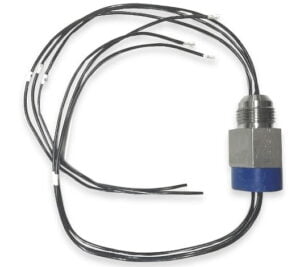
Cryogenic wire feedthrough with JIC fitting allows for operation in high pressure and low temperatures.
Although small in size, electrical pass throughs play a critical role in maintaining performance and reliability in cryogenic semiconductor manufacturing systems. Epoxy-based hermetic electrical feedthroughs have been successfully used in these environments for more than 15 years and continue to evolve as performance requirements increase.
Newer cryogenic designs at Douglas Electrical Components case epoxy directly around conductors within a metal fitting, creating a robust primary seal. Our engineers developed a subtle interlocking feature within the exterior of the fitting to further enhance reliability. During the casting process, the epoxy flows into and around this feature, forming a strong mechanical bond between the epoxy and the metal.
In cryogenic temperatures, the epoxy contracts more than the surrounding metal. This controlled differential contraction increases compression at the interface, strengthening the seal and enhancing long-term integrity in ultra-low temperature environments.
Semiconductor manufacturers have the ability to apply this direct seal cryogenic feedthrough technology to products related to different conductors, including DuctorSeal® hermetic wire feedthroughs, PotCon® hermetic bulkhead connectors, and StudSeal™ hermetic terminal seals.
Conclusion
As cryogenic technology continues to advance, its role in semiconductor manufacturing will only become more significant. From improving process efficiency to enabling greater precision and reliability in the manufacturing process, the benefits are already clear and still evolving. However, success in these ultra-low temperature environments depends on the ability of materials and components to perform under extreme conditions.
Epoxy-based hermetic cryogenic pass throughs offer a proven and adaptable solution, combining strong mechanical bonding with the ability to thrive in cryogenic applications. As the industry continues to push the limits of performance and miniaturization, innovations like these will be essential in supporting the next generation of semiconductor technology.