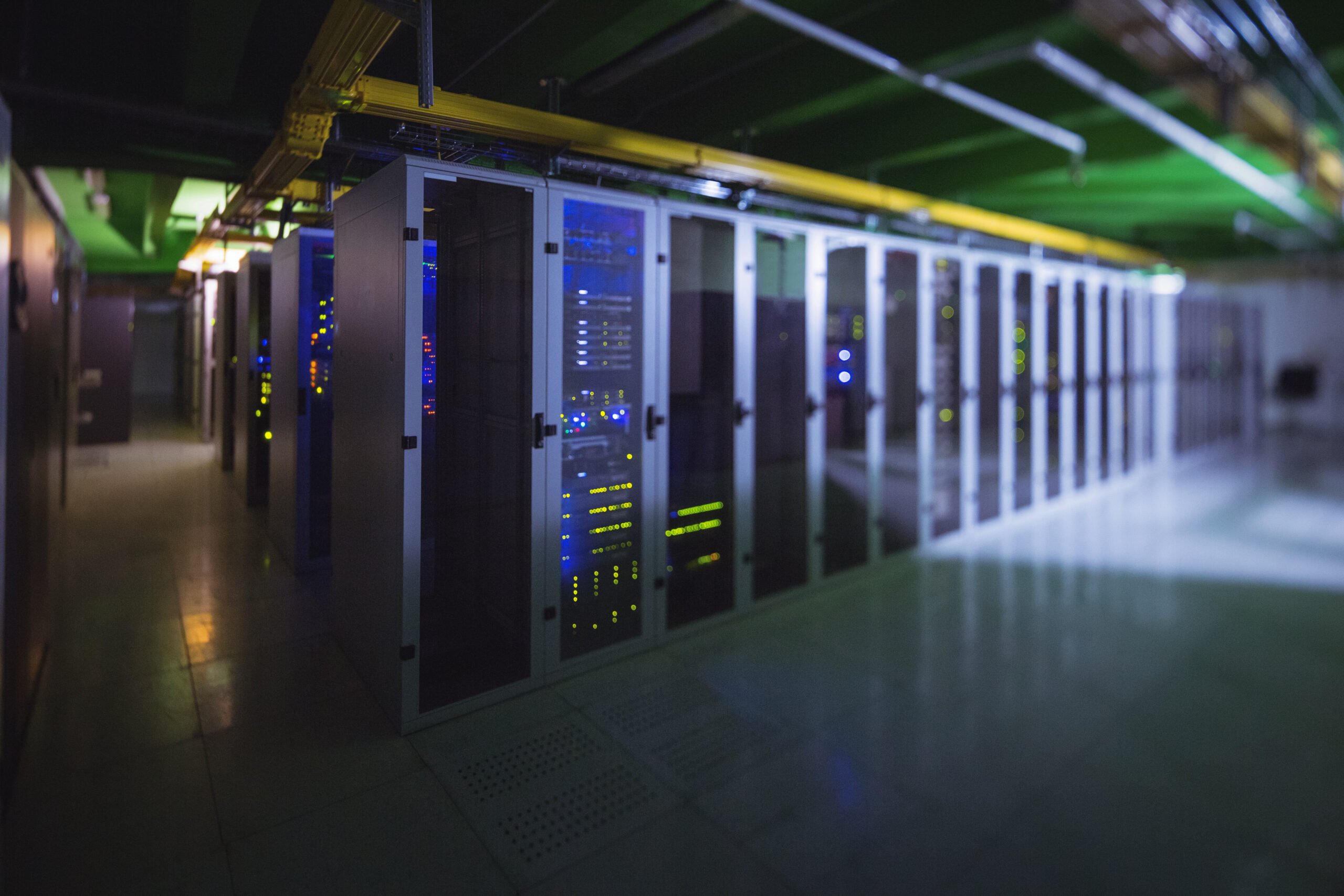
On November 27, 2025, when millions of Americans were shopping for holiday deals, traders in Chicago faced something far more expensive than missing a sale. The Chicago Mercantile Exchange (CME) temporarily halted trading across its platforms after a cooling system failure at its CyrusOne CHI1 data center in Chicago. The outage rippled through global markets, affecting everything from oil futures to stock index options. Financial firms couldn’t execute trades. Risk managers couldn’t hedge positions. For about 10 hours, billions of dollars in potential transactions were frozen. This wasn’t just another technical glitch. It exposed how vulnerable our digital infrastructure remains to something as fundamental as temperature control.
The same vulnerability affects quantum computing and supercomputers running climate simulations, artificial intelligence (AI) training clusters processing neural networks, and research facilities analyzing genomic data. Cooling failures can interrupt, invalidate, or require partial reruns of long-duration simulations or training jobs, resulting in significant time, cost, and research delays. So, what’s the solution? For high-density computing environments , the answer increasingly lies in immersion cooling paired with properly engineered feedthroughs. However, before we get to solutions, we need to understand why traditional cooling approaches keep failing.
Cooling Failures in AI and High-Performance Computing (HPC): A Growing Threat
Over the years, financial institutions, cloud service providers, and research facilities all reported downtime traced back to thermal management failures. These failures are becoming more frequent for the following reasons:
- Modern processors, especially used in high-performance environments like AI and HPC pack more transistors into smaller spaces, leading to high power density, and more heat in a limited space.
- High-performance computing clusters and AI training systems can generate heat densities exceeding 50 kW per rack. Some specialized supercomputer configurations push past 100 kW per rack.
- Traditional air cooling simply can’t handle these thermal loads efficiently. It’s like trying to cool a blast furnace with a desk fan.
- Liquid cooling helps, but most implementations still rely on complex networks of pipes, pumps, heat exchangers, and control systems. Each component represents a potential point of failure. A single pump malfunction or pipe leak can cascade through the entire system.
When these failures occur in mission-critical environments like financial exchanges or supercomputing facilities, the costs escalate rapidly. The financial sector learned this lesson hard during the CME incident. Supercomputer operators have known it for years. When you’re running month-long climate simulations or using large language models, you can’t afford to lose progress because a cooling pump failed.
Immersion Cooling: A More Direct, More Reliable Heat Path
Here’s a concise engineering view of how immersion cooling changes the thermal equation and what it demands from the surrounding electrical and mechanical interfaces.
- Direct Submersion Heat Transfer: Immersion cooling involves submerging IT hardware in dielectric fluid to directly absorb heat from components, eliminating the need for air cooling and traditional heat exchangers. This direct thermal management approach is gaining traction in high-performance computing (HPC) and AI environments, where traditional cooling methods struggle to keep up with increasing heat loads.
- Headroom for Extreme Power Density: Immersion cooling supports >50–100 kW/rack scenarios by improving hA (film coefficient) versus air, sustaining higher TDP per node while maintaining target ΔT across CPU/GPU hot spots without aggressive fan laws.
- Stable, Uniform Thermals for Accuracy: The fluid’s thermal mass and higher specific heat damp transients, cutting spatial/temporal gradients that trigger throttling or bit‑error spikes, vital for weeks‑long HPC runs and AI training repeatability.
- Proven in High‑Demand Topologies: Adopted first by crypto mining and HPC, immersion cooling is now employed at AI clusters where GPU density, PDUs, and CDUs push conventional CRAC/CRAH limits.
Where Immersion Cooling Systems Are Most Vulnerable
Adopting data center immersion liquid cooling solves the heat‑transfer problem but introduces a different set of engineering imperatives: how to bring power, control, and data through the tank wall without compromising the liquid boundary. In every immersion cooling data center or immersion pc cooling setup, you still need:
- High‑current and high‑voltage feeds for compute trays
- Low‑voltage control and sensor lines
- High‑speed signals for monitoring and safety interlocks
If these penetrations are improvised with standard connectors, you risk:
- Fluid ingress and corrosion
- Electrical leakage or inadequate isolation
- Seal degradation that turns into maintenance headaches (and, in a worst case, a shutdown)
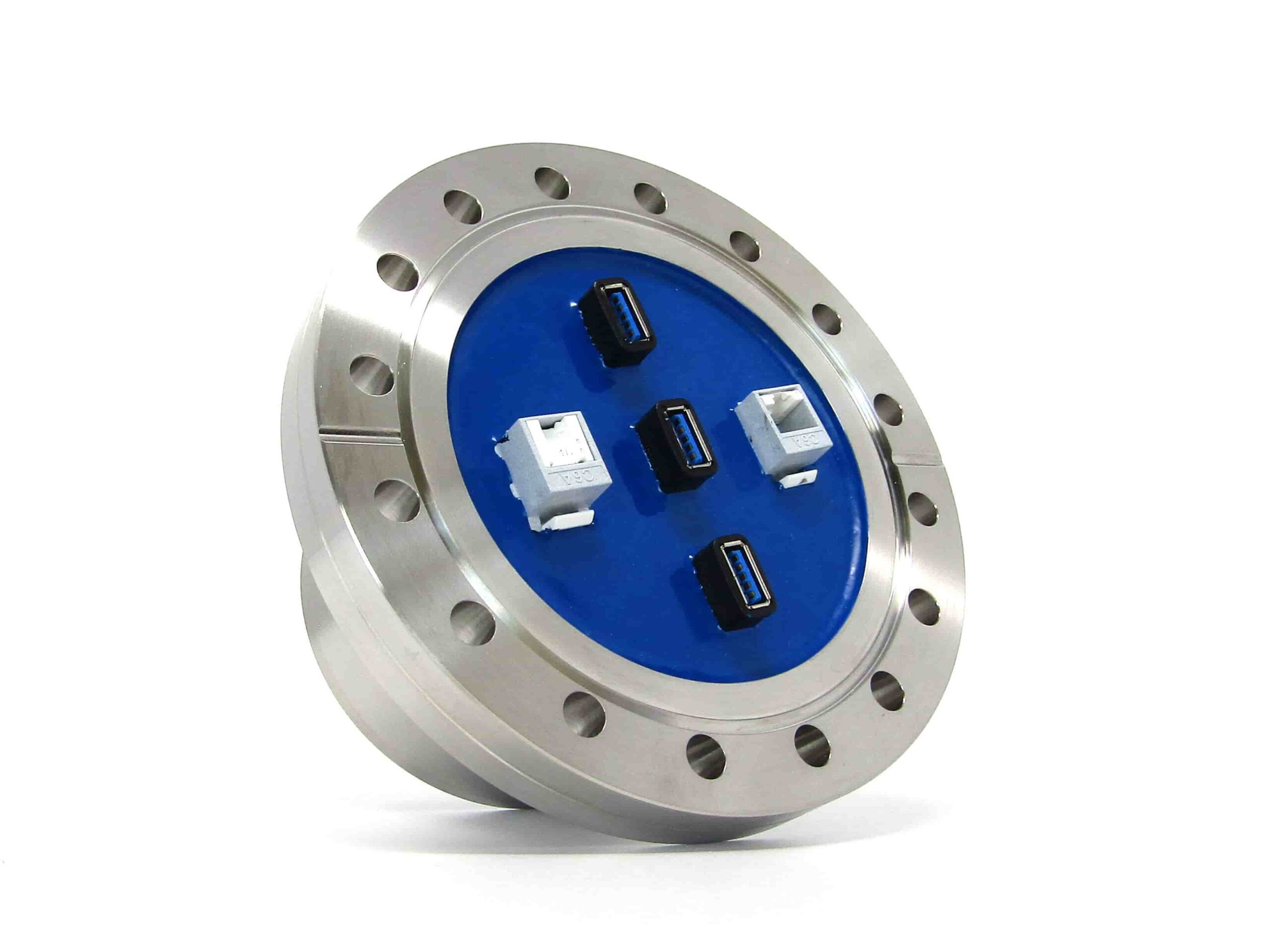
This is where an immersion cooling feedthrough may help. It is a mission‑critical component that preserves the integrity of the immersion cooling boundary while ensuring reliable power and signal continuity.
What Are Immersion Cooling Feedthroughs and Why They Matter
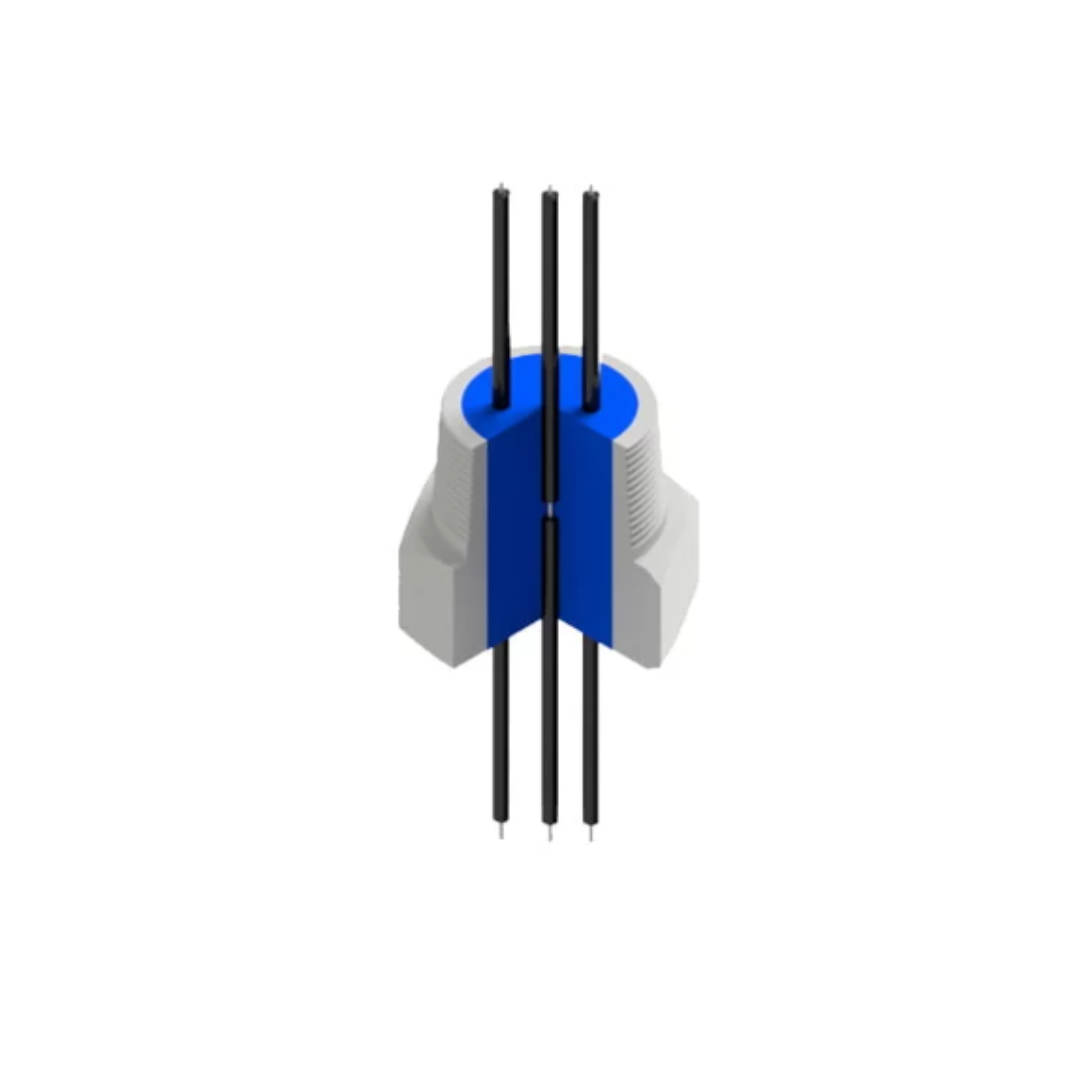
Immersion cooling feedthroughs are specialized, hermetically sealed connectors designed to pass power, data, or sensor signals through an immersion tank wall while maintaining full containment of dielectric fluid. They act as a critical isolation barrier, keeping the internal immersion environment completely separated from external conditions without compromising connectivity. Unlike ordinary bulkhead connectors, they are designed to:
- Maintain a fluid‑tight seal under pressure and temperature cycling
- Ensure dielectric compatibility with immersion fluids
- Provide electrical isolation and, where required, EMI/EMC performance
- Handle high current/voltage safely, with low contact resistance and robust creepage/clearance paths
How Immersion Feedthroughs Prevent Failures in Data Centers
Properly engineered feedthroughs prevent cooling system failures through several mechanisms.
- Ensures Continuous Thermal Performance: Properly engineered feedthroughs maintain complete fluid containment, preserving the dielectric fluid level required for full component submersion. Even minimal fluid loss can expose hardware to air, causing thermal hot spots and increasing the risk of failure. Reliable containment directly supports stable, predictable cooling performance.
- Preserves Dielectric Fluid Integrity: Hermetic sealing prevents moisture and particulate contamination that degrades dielectric fluid insulation properties. By keeping the fluid clean and chemically stable, high-quality feedthroughs protect long-term electrical performance and reduce fluid replacement costs.
- Withstands Thermal Cycling Without Seal Degradation: Well-designed feedthroughs accommodate thermal expansion through compatible material selection and stress distribution. Matching coefficients of thermal expansion between components prevents mechanical fatigue and seal failure under repeated temperature cycling.
- Maintains Electrical Isolation and System Stability: Effective electrical isolation prevents ground loops, stray currents, and electrical faults that can generate excess heat or disrupt sensors. Clear separation between internal and external grounds is essential in large-scale immersion deployments.
- Enables Predictive Monitoring and Reliability: Integrated sensor feedthroughs support temperature and pressure monitoring without compromising containment, enabling early fault detection and planned maintenance instead of emergency downtime.
Who Should Prioritize Immersion Feedthroughs Right Now?
As cooling demands in data centers and research facilities rise, the need for specialized, reliable feedthroughs has never been more critical. Environments with high power density, long uptime requirements, and high-risk tolerance such as below should prioritize investing in immersion feedthroughs to ensure system longevity and avoid costly failures.
- Hyperscale operators scaling AI training (where ambient rack kW rises fastest).
- Financial exchanges and low‑latency trading venues that cannot risk thermal outages measured in hours.
- National labs, supercomputing centers, and quantum computing companies building the next liquid cooled supercomputer clusters.
- Edge facilities in harsh climates, where submerged computer cooling mitigates environmental volatility.
From Concept to Commissioning: Mission-Critical Design of Immersion Cooling Feedthroughs
Designing feedthroughs for mission-critical applications for data centers, supercomputers, and quantum computing requires thinking beyond basic functionality.
- Engineer for Lifetime Reliability: Feedthroughs must form a permanent hermetic seal capable of reliable operation for decades. Design assumptions must account for continuous exposure to dielectric fluids, thermal cycling, and uninterrupted operation.
- Validate Material Compatibility: Material selection must be verified against the specific dielectric fluids used, as incompatible metals can cause galvanic corrosion or chemical degradation. Industry guidance highlights fluid–material compatibility testing as essential for immersion cooling reliability.
- Size Electrical Paths for Peak Load: Current-carrying conductors must be sized for worst-case power demand, not average load. Undersized conductors concentrate heat at the feedthrough interface, accelerating seal fatigue despite efficient bulk fluid cooling.
- Preserve High-Speed Signal Integrity: High-speed data paths require controlled impedance to avoid reflections and signal loss at the tank boundary. Industry standards for 40-100+ Gbps links define strict impedance and alignment requirements.
- Enable Serviceability and Proven Qualification: Feedthroughs should allow inspection and testing without draining tanks or disturbing immersion systems. Qualification must include thermal cycling, helium leak testing, and high-potential testing to confirm hermeticity and electrical isolation.
Looking Ahead: Future‑Proofing Against the Next Cooling Failure
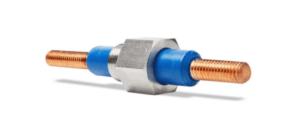
Need help mapping your requirements to feedthrough specifications? Douglas Electrical Components specializes in custom, hermetically sealed electrical feedthroughs engineered for demanding environments, including immersion cooling for data centers, supercomputer projects, and quantum computing that cannot tolerate downtime. We engineer power and signal feedthroughs to be fluid-compatible, maintain long-term seal integrity, and handle high current/voltage with the creepage, clearance, and insulation systems immersion tanks require. From single bulkheads on a compact immersion cooling pc tank to multichannel arrays for an immersion cooled data center, our designs match geometry, conductor count, current density, grounding, and EMI needs so you don’t have to compromise on layout or serviceability. Contact us today to discuss your project requirements