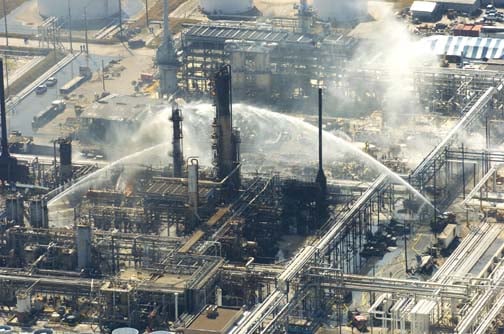
A process fluid release at the Valero Port Arthur refinery in Texas triggered a significant fire event in early 2026. Weeks later, a separate blaze broke out at a chemical plant in Pasadena, Texas. These incidents made headlines, but for engineers and systems designers producing solutions for hazardous locations, they were only reminders of the importance of using high-quality, reliable components
While investigations often focus on process failures or material releases, less visible components can play an equally important role. Electrical penetration points where power or signal lines pass through enclosures are one area. If not properly sealed and tested to meet certified standards, they can introduce pathways for ignition. Explosion seals do not have to be heremtic, but if there is a process seal holding pressure or vacuum then the seal also needs to be hermetic.
Key point: UL and ATEX/IECEx-certified feedthroughs help reduce risk, improve safety compliance, and support long-term system reliability in hazardous environments. The seal’s location impacts the decision to use a hermetic or non-hermetic solution.
Hidden Risks at Electrical Penetration Points in Hazardous Environments
Hazardous locations such as refineries, chemical processing plants, and fuel handling systems operate under strict safety and containment requirements. While most attention is given to major equipment and process systems, electrical penetration points are also highly sensitive areas.
These entry points are responsible for maintaining enclosure integrity while allowing electrical connectivity. They sit at the boundary between internal and external environments, where even minor design or sealing weaknesses can introduce risk over time.
Key hidden risk factors include:
- Electrical interfaces located at enclosure boundaries where sealing integrity is continuously challenged by pressure, temperature, and vibration conditions.
- Dependence on small-scale sealing elements that may degrade gradually without immediate detection.
- Exposure of feedthrough points to both internal process conditions and external environmental stressors.
- Overreliance on standard or non-specialized components in areas requiring certified hazardous location protection.
- Limited visibility during system operation, making early-stage degradation difficult to identify without inspection or testing.
In many systems, these risks remain unnoticed until performance degradation or safety events occur, which is why certified sealing solutions are critical in hazardous environments.
Common Electrical Interface Failures Leading to Fires and Explosions
Electrical interface failures in hazardous environments rarely occur as isolated events. They typically develop at connection points where sealing, insulation, and electrical continuity must remain stable under stress. When these interfaces degrade, they can introduce ignition sources or allow hazardous media to enter protected systems.
Common failure modes include:
- Gas ingress into electrical enclosures: Compromised sealing at cable entries or connectors can allow flammable gases or vapors to enter enclosed spaces, creating an ignitable atmosphere.
- Loss of sealing integrity at feedthrough points: Degradation of sealing materials or improper installation can lead to gradual leakage that may not be detected during routine operation.
- Electrical arcing at connection interfaces: Increased resistance, loose terminations, or contamination can result in localized heating or sparking under load conditions.
- Insulation breakdown under environmental stress: Exposure to temperature cycling, vibration, or corrosive media can weaken insulation systems and increase the likelihood of electrical faults.
- Use of non-certified components in hazardous locations: Components without ATEX/IECEx certification, UL certification, or equivalent hazardous location ratings may not be designed to prevent ignition under fault conditions.
These failure modes are often interconnected and can compound over time, increasing the probability of fire or explosion events in chemical and refinery environments.
The Role of UL & ATEX/IECEx Certification in Hazardous Safety Compliance

Failures at electrical interfaces do not need to be large to create high-risk outcomes. Even small breaches in sealing or insulation can initiate conditions that lead to ignition in hazardous environments.
To control this risk, hazardous location equipment is governed by structured certification frameworks that define performance limits, testing requirements, and allowable operating conditions. UL, ATEX, and IECEx certifications serve as key standards used to reduce ignition risk in explosive atmospheres.
- Atmosphères Explosibles (ATEX) is a European Union regulatory framework that defines equipment and workplace requirements for use in potentially explosive atmospheres. It classifies equipment based on the type of hazardous environment and ensures it is designed and tested to prevent ignition sources under both normal and fault conditions.
- International Electrotechnical Commission System for Certification to Standards Relating to Equipment for Use in Explosive Atmospheres (IECEx) is an internationally recognized certification system that verifies compliance with global standards for explosion protection. It enables consistent safety evaluation across different regions and regulatory systems.
- Underwriters Laboratories (UL) certification adds another layer of validation, focusing on electrical safety, fire resistance, and performance verification under defined operating conditions, particularly in North American installations.
Together, these certification systems create a structured safety framework that reduces uncertainty in hazardous environments. They ensure that components used at critical interface points are not only functional but also verified for safe behavior under fault conditions where ignition risk must be minimized.
How UL & ATEX/IECEx-Certified Feedthroughs Reduce Risk
Certified feedthroughs address failure points at electrical interfaces by creating a controlled, sealed barrier between hazardous and non-hazardous environments. When designed in compliance with ATEX and IECEx requirements, these components are validated for use in explosive atmospheres where ignition control is critical.
Unlike standard electrical entry points, UL fire-rated assemblies and certified feedthroughs are tested for performance under both normal and fault conditions. This includes exposure to pressure variations, temperature extremes, vibration, and potential electrical fault scenarios.
Key risk reduction mechanisms include:
- Sealed electrical isolation: Hermetic feedthroughs prevent gas, vapor, and moisture ingress at enclosure penetration points, maintaining separation between hazardous and protected zones.
- Controlled ignition risk at interfaces: Certified designs ensure that electrical conductors remain isolated and insulated, reducing the likelihood of arcing or sparking at entry points.
- Pressure and environmental stability: Sealing systems maintain enclosure integrity under fluctuating pressure and temperature conditions, reducing stress on internal components.
- Validated performance under fault conditions: ATEX and IECEx certification require testing beyond normal operation, ensuring components remain safe even during abnormal electrical or environmental events.
- Standardized compliance for hazardous locations: Certified feedthroughs simplify system-level compliance by aligning with recognized global safety frameworks used in chemical plants, refineries, and other hazardous facilities.
These feedthroughs eliminate one of the most common weak points in hazardous systems, the electrical penetration interface. By maintaining both mechanical sealing and electrical integrity, they reduce the likelihood of conditions that lead to chemical plant explosions or refinery fire events.
Applications Where UL & ATEX/IECEx-Certified Hermetic Feedthroughs Are Critical
UL, ATEX, and IECEx-certified hermetic feedthroughs are used wherever electrical interfaces must pass through hazardous boundaries without introducing ignition risk or sealing failure points due to pressure or vacuum conditions. These environments typically involve flammable gases, vapors, or combustible dust, where even minor leakage or electrical fault conditions can escalate into chemical plant explosions or refinery fire events. Engineers can choose non-hermetic solutions when explosion-proof standards are the only concern.
- Oil refineries and petrochemical units: Oil refineries and petrochemical facilities use feedthroughs at electrical penetration points in process vessels, distillation columns, and control enclosures. These interfaces help prevent vapor ingress and maintain electrical isolation in classified hazardous zones, including environments associated with incidents such as the Texas refinery disaster.
- Chemical processing plants: In chemical processing plants, sealed feedthroughs are used in reactors, mixers, and storage systems that handle volatile and reactive compounds. These installations reduce the risk of leakage or electrical faults at entry points, which are common initiating factors in chemical plant explosions.
- Gas processing and LNG facilities: Gas processing plants and LNG facilities operate under high pressure and cryogenic conditions where even minor leakage can create explosive atmospheres. Hermetic feedthroughs maintain long-term sealing integrity across electrical and optical interfaces in these systems.
- Pharmaceutical and specialty chemical production: Pharmaceutical and specialty chemical facilities use ATEX certified equipment in areas where solvents, fine chemicals, and reactive substances are processed. Certified feedthroughs help maintain controlled environments and reduce ignition risk in sensitive production zones.
- Mining and dust-prone industrial environments: Mining operations and dust-intensive facilities depend on IECEx-certified systems to reduce ignition risks in areas where airborne combustible dust can accumulate. Sealing at electrical interfaces helps prevent dust ingress and associated fire hazards.
- Offshore platforms and marine energy systems: Offshore oil and gas platforms operate in environments with salt exposure, vibration, pressure variation, and flammable gas presence. Hermetic feedthroughs provide stable sealing performance at electrical entry points, helping maintain system reliability in harsh marine conditions.
- Control systems and instrumentation cabinets in hazardous zones: Control systems and instrumentation enclosures in hazardous areas rely on sealed feedthroughs for sensor wiring, signal transmission, and power connections. These interfaces ensure separation between energized circuits and explosive atmospheres while maintaining operational integrity.
Across all these applications, electrical penetration points remain one of the most sensitive failure locations. UL fire-rated assemblies and ATEX/IECEx-certified feedthroughs reduce risk by maintaining a sealed and verified interface between hazardous and non-hazardous environments, supporting safer long-term system operation.
Douglas Electrical Components: Experts in UL & ATEX/IECEx-Certified Feedthrough Solutions
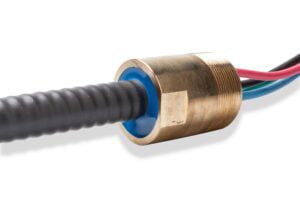
explosion-proof conduit seal with cable to wire configuration and armor jacket
Douglas Electrical Components provides feedthrough solutions engineered for hazardous environments where sealing integrity at electrical penetration points is critical. We have multiple products that are certified for UL or ATEX/IECEx use, making them suitable for high-risk industrial applications and hazardous location (haz-loc) systems.
Our portfolio also includes explosion-proof NPT wire bushings , designed for secure, sealed conduit and cable entry points in hazardous locations where controlled interface sealing is required.
By focusing on sealing integrity, material compatibility, and rigorous testing, our engineering approach supports systems that reduce ignition risk at critical interface points in hazardous environments.
For organizations evaluating how to prevent chemical plant explosions and improve safety in haz-loc, attention to electrical penetration points is essential. Our explosion-proof NPT wire bushings and hermetic feedthrough solutions provide a practical sealing approach for conduit and cable entry points in classified environments, supporting UL, ATEX, and IECEx compliance across oil and gas, chemical processing, and other high-risk industries.