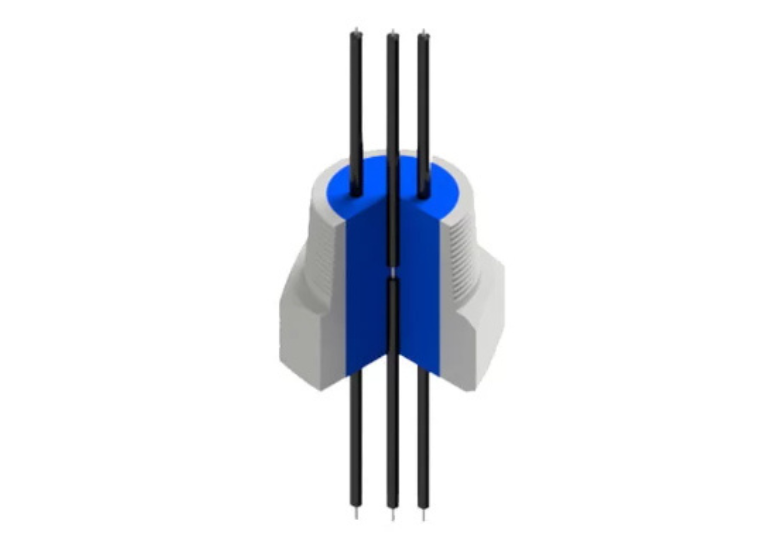
When it comes to hermetic sealing, not all epoxy processes are created equal. In industries where electrical signal integrity and environmental protection are mission-critical, such as aerospace & defense, and industrial systems, even the smallest failure can lead to costly downtime or system loss. Unlike others, at Douglas Electrical Components, our proprietary epoxy sealing process is specifically engineered to solve challenges that other feedthroughs simply cannot handle.
At the core of Douglas Electrical Components’ approach is our ability to address coefficient of thermal expansion (CTE) mismatch.
What is CTE Mismatch?
CTE mismatch refers to differences in the coefficient of thermal expansion (CTE) between two connected materials, which can lead to mechanical stresses during changes in temperature. It is one of the most common causes of seal failure, especially in harsh environments that experience extreme temperature fluctuations. Douglas’s epoxy sealing process is designed to maintain seal and signal integrity despite these stresses, providing unparalleled design flexibility at critical electrical connection points.
A Proven Step-by-Step Sealing Process


Our epoxy sealing method follows a defined, repeatable process that ensures consistent quality. Here is a step-by-step overview of this process in a DuctorSeal® feedthrough.
-
Step 1: Preparing Materials for a True Hermetic Seal
The process begins with precise preparation. Each material is cleaned, treated, and prepped to ensure optimal adhesion. A section of the wire is carefully stripped to expose the conductor. This step sets the foundation for a hermetic seal that prevents gas or moisture from penetrating the assembly.
-
Step 2: Precise Wire Placement and Electrical Isolation
Next, the wires are positioned within the housing. This is a critical step that supports hermeticity and ensures electrical isolation between conductors. Proper placement prevents shorts, maintains signal strength, and supports stable long-term performance.
-
Step 3: Controlled Epoxy Dispensing and Curing
Douglas Electrical Components uses a proprietary epoxy formulation engineered for demanding environments. The housing is filled to eliminate any potential voids or leak paths. Once dispensed, the epoxy undergoes a controlled curing process designed to optimize strength and thermal stability.
The materials and methodology we use allow the epoxy, conductor, and housing to expand and contract together, thereby reducing stress, preventing cracks, and preserving seal integrity over time.
-
Step 4: Rigorous Testing for Certified Quality
Every feedthrough is tested, not just a sample.
100% of parts undergo:
- Electrical testing to ensure isolation and continuity.
- Helium leak testing to verify true hermeticity.
To see the process in action, watch the epoxy sealing demonstration video here:
➤ You can also view a visual breakdown here:
Reliable Results, Every Time
With all potential leak paths blocked and each conductor sealed down to the core, Douglas epoxy feedthroughs deliver long-term, high-performance results that consistently outperform alternative sealing methods. Whether used in aerospace and defense, energy, industrial equipment, or scientific instrumentation, the results are the same: uncompromising quality and reliability.